
Redemption of the Firstborn Donkey
A rare commandment. A living obligation.
Donkeys have largely disappeared from modern transportation
and daily work. The Torah commandment connected with the
firstborn donkey has not.
donkey
or goat

The Torah gives the first male offspring of a donkey a special legal status when the conditions of the commandment are met. The animal is redeemed with a live sheep or goat, and the redemption animal is given to a Kohen — a member of the hereditary Jewish priesthood descended from Aaron.
“Every firstborn donkey you shall redeem with a sheep.”
Exodus 13:13
In the ancient world, donkeys were ordinary working animals. They carried people and goods, supported agriculture, and represented real economic value.
Modern transportation and machinery have almost completely replaced those functions. As a result, the opportunity to encounter this commandment in practice is now extremely rare.
Rare, however, does not mean obsolete. When the conditions established by Jewish law are present, the commandment still applies.
Donkey, redemption, Kohen
The basic structure is straightforward: the firstborn donkey is redeemed, and the animal used for the redemption is given to a Kohen.
A firstborn donkey is born
The commandment concerns the first male offspring to open the womb of a female donkey, when the relevant legal conditions are present.
The donkey is redeemed
A live sheep or goat is designated for the redemption. The donkey’s special legal status is removed through that act.
The Kohen receives the gift
The animal used for the redemption becomes the property of the Kohen, and the donkey may then be used normally.
Why a donkey?
This redemption is not assigned to every species of non-kosher animal. The Torah specifically singles out the donkey.
Jewish tradition connects the commandment of the firstborn with the Exodus from Egypt: the striking of the Egyptian firstborn and the deliverance of Israel’s firstborn.
Rabbinic tradition also gives the donkey a particular place in the story of the Exodus, noting the role donkeys played in carrying possessions as the Israelites left Egypt.
Rare — but not discontinued
The fact that very few people today own donkeys does not change the legal status of the commandment. When the situation described by the Torah occurs, the obligation becomes practical.
Even the head of the Jewish community asked how much to give
The Talmud records that Rabbi Judah Nesi’ah had a firstborn donkey and sent a question to Rabbi Tarfon asking how much he should give to the Kohen.
“How much do I need to give the Kohen?”
Rabbi Tarfon answered by describing different levels of generosity, and the discussion continues into the practical value of the redemption.
The episode makes the commandment concrete. This was not simply a ceremonial reenactment. Property changed status, and a real gift of economic value was transferred to a Kohen.
Rabbi Tarfon was himself a Kohen
That detail gives the discussion particular weight. Rabbi Tarfon was not merely a scholar answering an abstract question about priestly gifts. Kiddushin 71a preserves his own recollection of ascending behind his maternal uncle among the Kohanim and listening near the High Priest.
Priestly biographical tradition also connects Rabbi Tarfon with the line of Ezra the Scribe. Ezra’s biblical genealogy runs through Tzadok, Phinehas, Eleazar and Aaron. In that traditional lineage, Rabbi Tarfon stands within one of Israel’s ancient priestly lines.
The exchange in Bekhorot therefore has an additional historical dimension: a Kohen rooted in priestly tradition is answering a practical question about the value of a Torah gift that is itself due to a Kohen.
Learn about the Kohanim, Sons of TzadokThe donkey has a real legal status
Before redemption, Jewish law assigns the qualifying firstborn donkey a special status and prohibits deriving ordinary benefit from it.
The redemption changes that status. The donkey becomes available for normal use, while the sheep or goat used for redemption belongs to the Kohen.
A commandment most people will never encounter
For much of history, a donkey could be a working animal, a means of transportation, and a valuable household or agricultural asset.
Cars, trucks, tractors and modern machinery now perform those functions far more efficiently. Most Jewish families will therefore never face an actual case of firstborn donkey redemption.
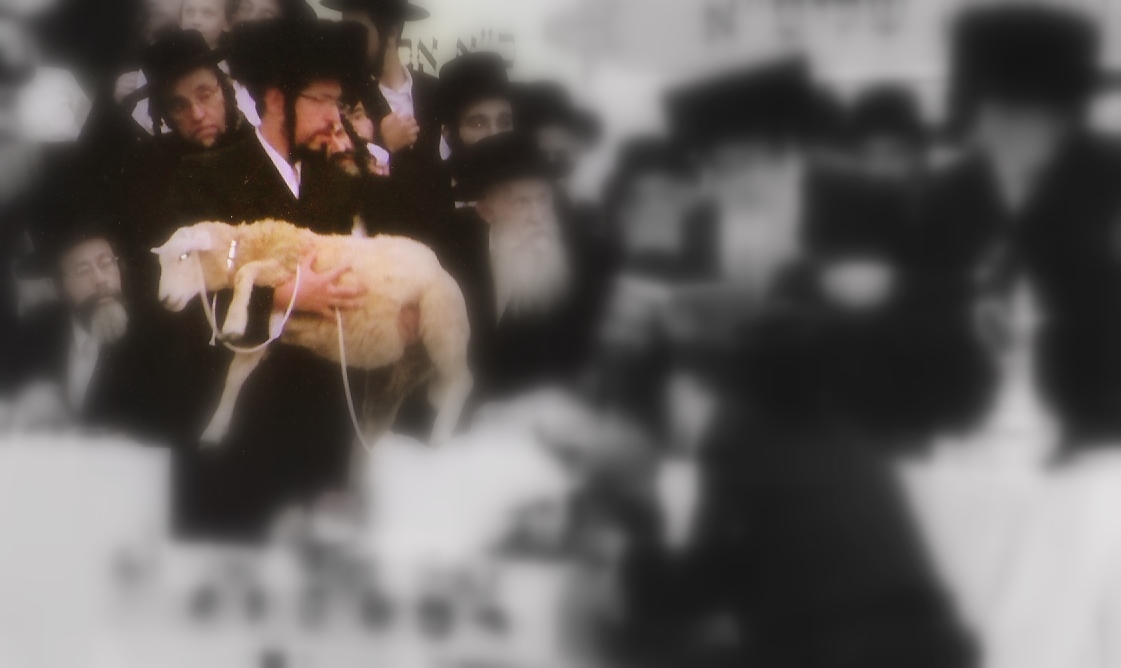
A real ceremony in upstate New York
An actual firstborn donkey redemption ceremony documented by Igud HaKohanim. The photograph provides a modern example of this rarely encountered commandment in practice.
The redemption animal goes to the Kohen
Redemption of the firstborn donkey belongs to the broader Torah framework of designated gifts received by the Kohanim, the descendants of Aaron.
Maimonides states the rule directly: the animal used to redeem the donkey is given to the Kohen.
The Kohen is not simply being hired to officiate. He receives the gift because Jewish law assigns it to the priestly family.
Part of the Torah’s framework of priestly gifts
Firstborn donkey redemption is one part of a broader system connecting first gifts, sacred designation, property and the Jewish priesthood.
Explore the gifts to the KohanimPidyon Peter Chamor
In traditional Jewish sources, the commandment is called pidyon peter chamor (פדיון פטר חמור), literally “redemption of the firstborn donkey.”
This page generally uses the English name so that the subject remains clear regardless of the reader’s familiarity with Hebrew.
Primary sources
Open sources and bibliography
- Exodus 13:11–15 — the firstborn and redemption of the firstborn donkey.
- Numbers 18:15 — redemption of the firstborn within the Torah’s laws of designated gifts.
- Mishnah, Avodah Zarah 5:9 — the legal status of an unredeemed firstborn donkey.
- Babylonian Talmud, Bekhorot 11a — Rabbi Judah Nesi’ah, Rabbi Tarfon and the value of the redemption.
- Babylonian Talmud, Kiddushin 71a — Rabbi Tarfon’s recollection of ascending behind his maternal uncle among the Kohanim.
- Jerusalem Talmud, Yevamot 1:6 — the tradition placing Rabbi Tarfon alongside Rabbi Elazar ben Azariah in the context of Ezra’s lineage.
- Ezra 7:1–5 — Ezra’s priestly genealogy through Tzadok, Phinehas, Eleazar and Aaron.
- Maimonides, Book of the Commandments, Positive Commandment 81 — the commandment to redeem the firstborn donkey.
- Maimonides, Mishneh Torah, Laws of First Fruits and Other Gifts to the Kohanim, Chapter 12 — laws of redemption and the gift to the Kohen.
- Sefer HaChinuch, Commandment 22 — the meaning and continuing application of the commandment.
This page is a public introduction. An actual case may involve detailed questions of ownership, birth order, uncertainty, partnership and the correct form of redemption.
Keeping the Torah of the priesthood alive
Your support helps advance research, education, source publication and practical awareness of the Torah’s laws concerning the Kohanim and the gifts assigned to the Jewish priesthood.
Support Igud HaKohanim