
THE PRIESTLY HOUSEHOLD
The Wife of a Kohen
The wife of a Kohen is a partner in building a home that carries the identity of the Kehuna, preserves the memory of the family, and helps transmit the heritage of Ahron to future generations. Her marriage to a Kohen creates a meaningful familial connection under Torah instruction in matters relating to the household, terumah, priestly gifts, and family law.
An Identity of Partnership
The title wife of a Kohen describes a woman who is married to a Kohen and enters with him into a family framework that carries practical consequences within the laws of the Kehuna. Marriage does not make her the daughter of a Kohen and does not change the lineage of her father’s household. It does, however, join her to a priestly household and to certain rights and laws connected with it.
A daughter of Israel, a Levite woman, or the daughter of a Kohen who is married to a Kohen may, when the conditions established by Torah instruction are met, partake of terumah and certain gifts given to the priestly household. The sources also treat marriage as a bond that creates shared responsibility in matters involving offerings, the ketubah, redemption, and mourning for close relatives.
The significance of the wife of a Kohen is also expressed in daily life: preserving family memory, educating children, transmitting names and traditions from one generation to the next, welcoming guests, and building a home that reflects the qualities of Ahron—loving peace, pursuing peace, and drawing people closer.
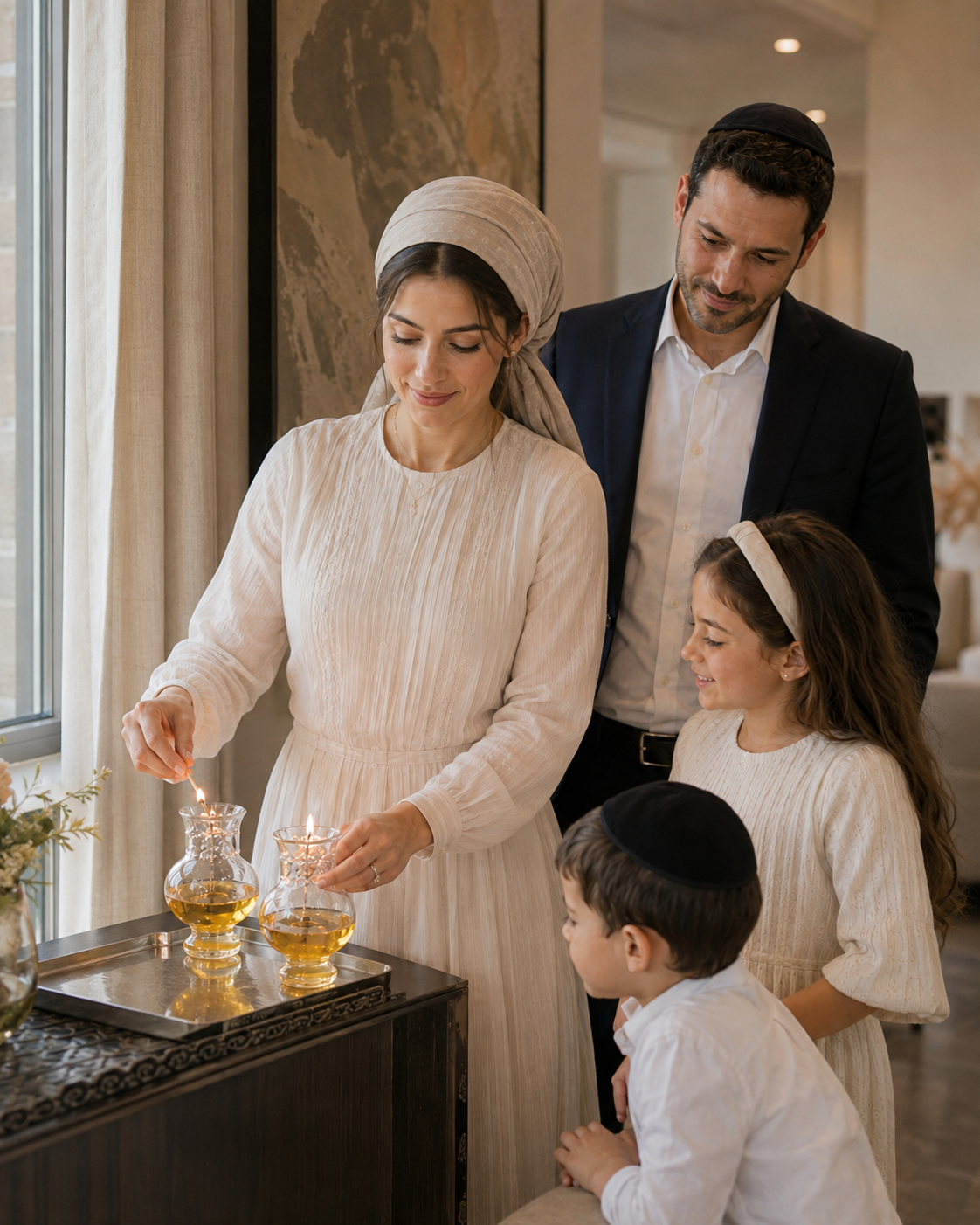
Three Foundations of the Priestly Household
A priestly household is built through partnership, continuity, and blessing. The wife of a Kohen has an important role in transforming family identity into a living tradition passed from one generation to the next.
Partnership in Building the Home
The wife of a Kohen is a partner in creating a home that understands its identity, its traditions, and the practical meaning of life within a priestly family. This partnership is expressed through education, the conduct of the household, and the transmission of values to the children.
Preserving Family Continuity
Mothers and wives often preserve the names of earlier generations, family documents, memories, and customs. In doing so, they help maintain priestly continuity and the connection between the family’s past and its future.
A Home of Blessing
The sources include the women of the House of Ahron within the blessing of the family. That blessing is expressed through lives of faith, kindness, hospitality, modesty, wisdom, responsibility, and mutual respect.
The Torah Status of the Wife of a Kohen
Marriage to a Kohen affects several areas of Torah instruction and demonstrates the extent to which the Torah views husband and wife as a shared household with a common identity and responsibility.
Terumah and Priestly Gifts
A woman married to a Kohen may partake of terumah, the terumah of the tithe, challah, and certain priestly gifts, as long as the conditions established by Torah instruction are met.
Her Meal Offering
The meal offering she brings reflects the partnership created by marriage. Part of its status is connected to her own position, and part to the priestly status of her husband, giving it a distinctive law.
Rights and Responsibility
The laws of the ketubah and redemption express the husband’s obligation to care for his wife even when limitations arising from the laws of the Kehuna affect the marriage.
Priestly Questions Require Precision
Questions involving marriage, lineage, terumah, or personal status depend on the exact facts, the applicable sources, and the relevant traditions of the Kehuna. General summaries cannot determine the status of a particular case.
LEVITICUS 21:2
Except for his close relative who is nearest to him
His Close Relative — His Wife
The Sages understood the Torah’s expression his close relative as referring to a man’s wife. Marriage is described not merely as an agreement, but as a bond of shared life and exceptional closeness.
Under Torah instruction, a Kohen becomes ritually impure for his wife when she was permitted to him in marriage. Although a Kohen is generally commanded to avoid impurity from the dead, upon the death of his wife he must attend to her honor. The law reflects the depth of their bond and the responsibility that continues until the end of life.
Mothers of the Kehuna
The continuity of the Kehuna has also been preserved through mothers, wives, and daughters who transmitted faith, tradition, courage, and family memory to future generations.
Yocheved and Miriam
Yocheved and Miriam feared God and refused to submit to Pharaoh’s decree. They risked themselves to preserve the lives of the children of Israel, and the Sages connect their devotion with the establishment of houses of priesthood and kingship.
Sifrei, Deuteronomy 78
Our Daughters Like Cornerstones
The verse describes the daughters of Israel as sculpted cornerstones fashioned in the form of a palace. The Targum connects this image with worthy daughters who marry Kohanim serving in the sacred ministry.
Psalms 144:12
Shoshana, Daughter of Chilkiyah
Ancient Jewish tradition tells of Shoshana, the wife of Yoyakim, who faced coercion and a false accusation. Daniel exposed the contradictions in the testimony of her accusers and saved her from injustice.
The Story of Shoshana
THE BLESSING OF THE HOUSE OF AARON
He will bless the House of Ahron
The Zohar explains that the blessing of the House of Ahron includes the wives of the Kohanim. The Kohen blesses the people, while the blessing given to his household includes the entire family and the wife who shares in building it.
This understanding teaches that the Kehuna is not only the personal role of the Kohen. It is lived within a home, within marriage, and within a family that carries its memory and blessing together.
Captivity, Coercion, and Questions of Status
The laws of the Kehuna include complex questions involving a captive woman, sexual assault, coercion, and circumstances in which doubt arises concerning the continuation of a marriage to a Kohen. In certain cases, such events may have consequences under Torah instruction even when they occurred entirely against the woman’s will.
Torah instruction distinguishes between the question of priestly status and the moral responsibility of the woman. A woman who has been harmed is not considered responsible for an act forced upon her. The legal inquiry concerns the particular boundaries governing marriage to a Kohen.
Because the consequences may be serious, the Sages established particular rules for receiving testimony and clarifying the facts in cases involving captivity. In some circumstances, testimony that would not be sufficient in other areas was accepted so that a woman would not be prohibited where Torah instruction allowed her presumption of permitted status to remain.
Careful Determination
Questions of this nature require precise facts, discretion, and careful examination of the relevant sources. Public speculation, incomplete reports, and assumptions about personal status cannot establish a conclusion under Torah instruction.
What the Title Wife of a Kohen Expresses
It describes a living connection to the priestly household and its tradition while preserving the woman’s individual and family identity.
Personal Identity
The wife of a Kohen retains her personality, her father’s household, her abilities, and her individual calling. Her connection to the Kehuna becomes part of her identity without replacing it.
Family Partnership
She is a partner in building a home that understands the tradition and laws of the Kehuna, preserves family memory, and recognizes the household’s role in transmitting that heritage.
Priestly Awareness
Life in a priestly household includes awareness of the laws, traditions, responsibilities, and family history connected with the descendants of Ahron.
Building the Next Generation
Through education, family memory, and the life of the household, she helps carry the meaning of the Kehuna from earlier generations into the future.
Principal Sources
His Wife as His Close Relative
Leviticus 21:1–4; Sifra, Emor; Yevamot 90b; Maimonides, Laws of Mourning 2:7.
Terumah and Priestly Gifts
The laws of terumah, the terumah of the tithe, challah, first fruits, the breast and thigh, and additional gifts eaten within the priestly household.
The Meal Offering of a Kohen’s Wife
Sotah 23a; Maimonides, Laws of the Sacrificial Procedure 13:4.
A Captive Woman and the Wife of a Kohen
Ketubot 51b; Yevamot 56b; Nedarim 91a; sources concerning testimony in cases involving captivity.
Mothers of the Kehuna
Sifrei, Deuteronomy 78; Psalms 144:12 and its Targum; teachings of the Sages concerning Yocheved and Miriam.
The Blessing of the House of Ahron
Psalms 115; Zohar, Volume III, 117b.
This page provides a public introduction to the subject. Particular questions of priestly status depend upon the complete facts, the precise wording of the sources, and the applicable Torah tradition.
Support the Jeremiah Fund
Contributions to the Jeremiah Fund help Igud HaKohanim develop serious public education, research, documentation, and resources concerning priestly families and the laws of the Kehuna.
Your support helps preserve family traditions, expand responsible scholarship, and build educational materials for Kohanim, their families, and future generations.
Support the Jeremiah FundIgud HaKohanim
For general information about Igud HaKohanim, organizational matters, or the submission of relevant source material, visit our contact page.
Contact Igud HaKohanim