
Israel’s Priesthood · Numbers 10
The Silver Trumpets of Israel’s Priests
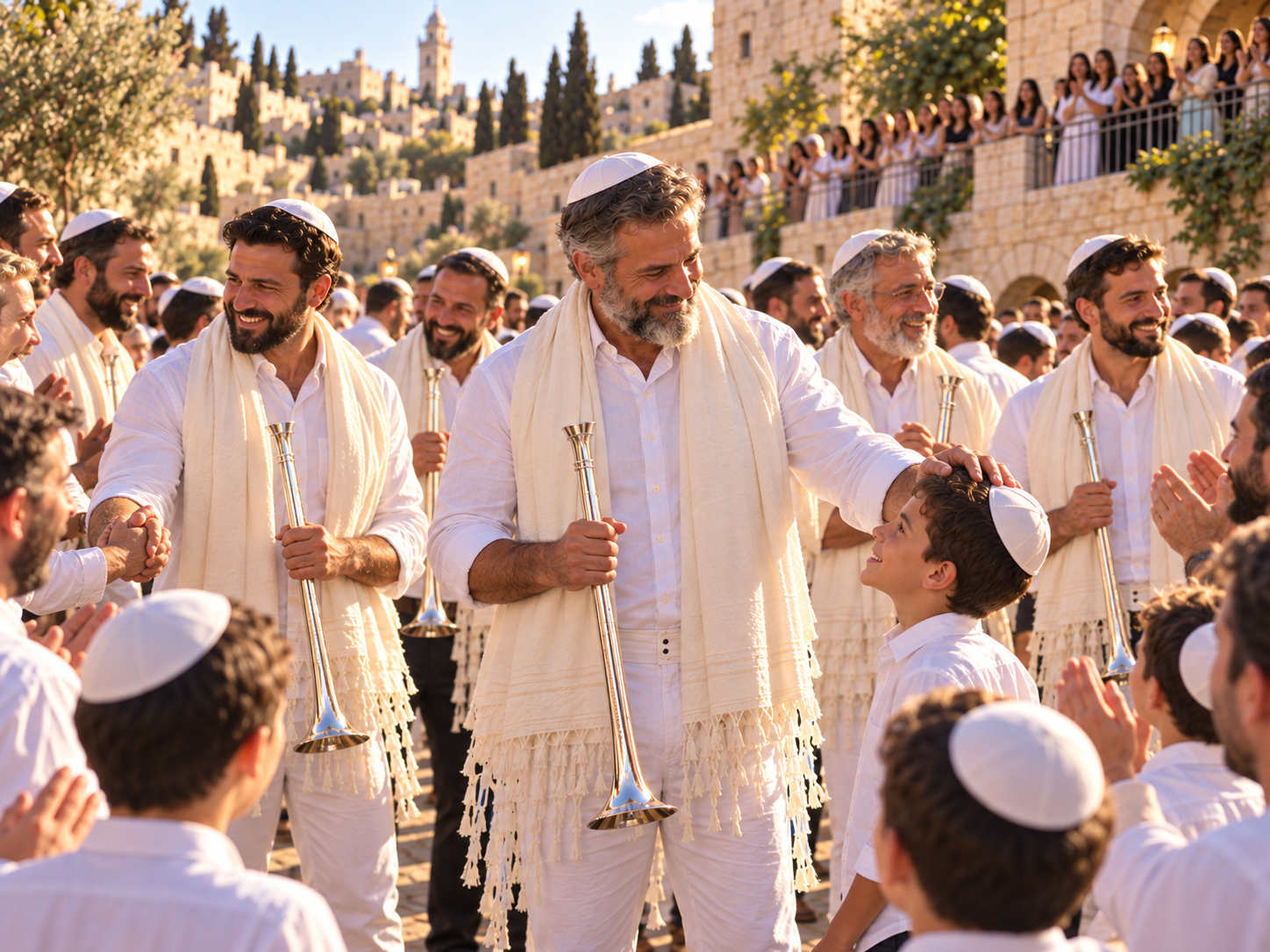
The Torah entrusts Aaron’s descendants, the priests, with the sounding of silver trumpets in sacred service and in times of communal distress. Their sound turns the attention of the people toward God.
The Torah First
A Responsibility Entrusted to Aaron’s Sons
God commands Moses to make two silver trumpets and then identifies the family entrusted with sounding them.
וּבְנֵי אַהֲרֹן הַכֹּהֲנִים יִתְקְעוּ בַּחֲצֹצְרוֹת וְהָיוּ לָכֶם לְחֻקַּת עוֹלָם לְדֹרֹתֵיכֶם
“The sons of Aaron, the priests, shall sound the trumpets; this shall be an everlasting statute throughout your generations.”
Numbers 10:8Later rabbinic sources and historical evidence help illuminate the command. They do not replace its Torah definition: silver trumpets, entrusted to Aaron’s descendants, sounded in the settings established by the Torah.
When & Why
The Sound of the Trumpets
Numbers 10 commands trumpet sounding over offerings on days of rejoicing, festivals and new moons. In the Temple, the trumpets became part of the public sacred service.
When Israel faces an enemy, the Torah commands the trumpets to be sounded so that Israel will be remembered before God and delivered. Classical sources extend the discussion to other communal troubles.
Sefer HaChinuch describes the powerful sound as a means of focusing the mind. The Rambam explains that distress should awaken prayer, repentance and recognition of divine providence, rather than being dismissed as meaningless chance.
The Instrument & the Priesthood
What the Sources Establish
“Make for yourself two trumpets of silver.” The Talmud treats silver as an essential feature of the Torah-defined instrument.
The Torah expressly assigns the sounding to the sons of Aaron. Biblical and rabbinic sources repeatedly associate the trumpet with the priests.
Josephus describes a narrow silver trumpet somewhat less than a cubit in length, widening into a bell. His account provides an important Jewish description from close to the Second Temple period.
Continuity & History
Remembered Across the Generations
Josephus
A Jewish physical description of the silver trumpet from close to the Second Temple era.
Arch of Titus
Temple vessels are depicted on the Roman relief, including objects commonly identified as the trumpets.
Bar Kokhba Coinage
Jewish coinage depicts paired upright trumpets in imagery connected with Jerusalem.
“Throughout Your Generations”
The classical tradition distinguishes between Moses’ original physical trumpets and the enduring command. Continuity of the priestly responsibility does not depend upon preservation of Moses’ original pair.
The Practical Question
Does the Command Apply Today?
The Rambam describes crying out and sounding trumpets during communal distress as a positive Torah commandment. Later authorities discuss why this has not remained common practice and debate its circumstances, location and practical form.
Kehuna.org presents these sources as part of the Torah knowledge belonging to Israel’s priesthood. This page is educational and does not substitute for a practical halachic ruling.
For Approved Kohanim
Silver Trumpets for Kohanim
Igud HaKohanim facilitates custom-made silver trumpets in connection with the study and preservation of this priestly commandment. Availability is restricted to Kohanim whose lineage has been reviewed and approved.
Sources & Bibliography
Torah and Early Sources
- Numbers 10:2, 8–10.
- Sifrei Bamidbar, Beha’alotcha, on Numbers 10:8–9.
- Menachot 28a — silver and construction.
- Arakhin 13b — minimum of two trumpets; up to 120.
- Rosh Hashanah 27a and Taanit 14a.
- Ezra 3:10; I Chronicles 16:6; II Chronicles 5:12.
Halachic and Philosophical Sources
- Rambam, Mishneh Torah, Laws of Fasts 1:1–4.
- Rambam, Sefer HaMitzvot, Positive Commandment 59.
- Rambam, Guide for the Perplexed III:36.
- Sefer HaChinuch 384.
- Maggid Mishneh, Laws of Fasts 1:4.
- Magen Avraham, Orach Chaim 576:1.
- Minchat Chinuch 384.
- Netziv, Emek HaNetziv to Sifrei Beha’alotcha.
Historical Witnesses
- Josephus, Antiquities III — description of the silver trumpet.
- Arch of Titus, Rome.
- Bar Kokhba coinage, 132–135 CE.
Support the Work
Help Preserve Israel’s Priesthood
Support the research, education, lineage preservation and practical initiatives of Igud HaKohanim.
Support Israel’s Priesthood