Challah: The First Dough
The first portion of a qualifying dough is separated and given to the Kohen. In the Land of Israel and throughout the Diaspora, challah remains a living gift of Kehuna.
What challah is
The word challah is commonly associated with the braided bread served on Shabbat. In the Torah and the teachings of Chazal, it refers more precisely to the first portion separated from a qualifying dough and raised as terumah.
The Torah commands that the first of the dough be raised as a gift to Hashem and gives the sacred gifts of Israel to Aharon and his descendants. Challah is therefore separated with a clear destination: the Kohen.
Burning challah is not the mitzvah. Once separated, the portion belongs to the Kohen and should be given to him to handle according to its halachic status.
The movement of challah
Separated
The first portion is removed from the dough and declared to be challah.
Given
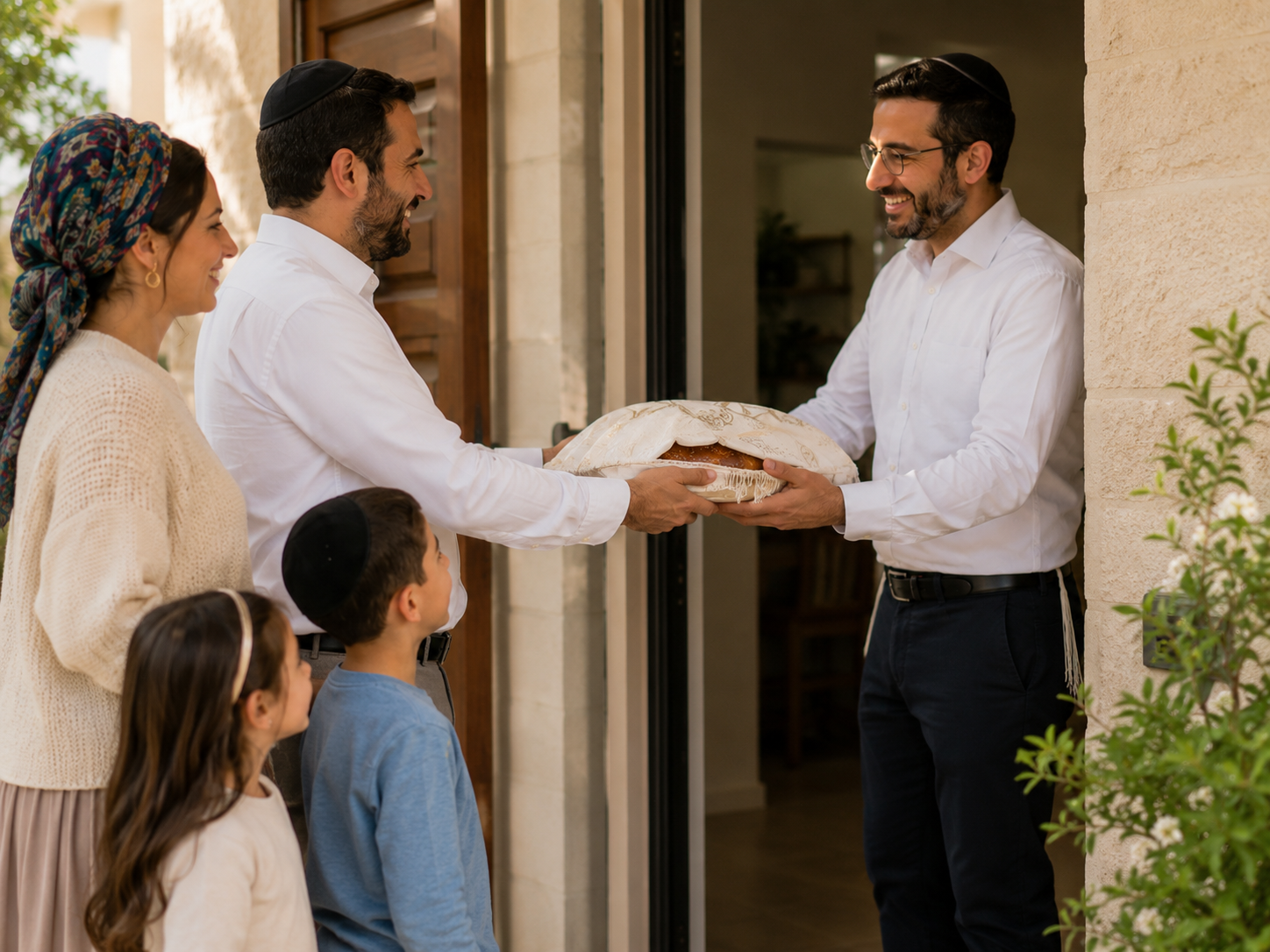
The separated portion is transferred to the Kohen, the recipient appointed by Hashem.
Received by the Kohen
The Kohen receives challah as the recipient designated by Hashem. Where consumption is permitted, the gift is expressed in its fullest practical form.
The Torah of Challah must remain visible
Challah was not established only so that a portion would be removed from the dough. It was separated as a gift to the Kohen, who receives it in the role given to the descendants of Aharon.
When Chazal acted so that the Torah of Challah would not be forgotten, they preserved its transfer to the Kohen and, where permitted, its consumption by him. The essential point is that the gift reaches the recipient designated by Hashem.
Challah is a portion given to the Kohen. Halachah preserves his right to receive it, to consume it where permitted, and to derive the forms of benefit assigned to him where eating is not permitted. These rights should be understood and observed with care and dignity.
Challah in the Land of Israel
The mitzvah of challah is rooted in the Land of Israel. In its complete form, the first challah was separated, given to a Kohen, and eaten in purity.
Today, the first challah generally may not be eaten because of ritual impurity and the absence of purification through the ashes of the parah adumah. This restriction concerns consumption. It does not erase the first challah’s identity as the Kohen’s gift.
The first challah
The first challah remains the Kohen’s portion even when he may not eat it. Impure terumah remains a gift of Kehuna, and halachah preserves permitted forms of benefit for the Kohen.
Its proper use depends on its condition and the applicable laws. It should be handled as the Kohen’s designated portion, not as ordinary waste.
The second challah
A second challah is separated and given to a Kohen for consumption so that the Torah of Challah will not be forgotten.
The first preserves the original gift and the Kohen’s permitted rights. The second preserves the visible giving and consumption of challah.
In the Land of Israel, both portions remain part of Kehuna: the first as the original gift, and the second as challah given for priestly consumption.
Challah outside the Land of Israel
Outside the Land of Israel, Chazal established challah so that the Torah of Challah would remain alive throughout the generations. Their enactment preserved a direct and practical path: the first challah is separated, given to a Kohen, and eaten by him.
The required conditions are ordinarily straightforward. A Kohen minor may eat the first challah. An adult Kohen may eat it after immersion from a form of tumah originating from his own body. When such a Kohen is available, only one challah is required: it is separated in the proper measure, given to him, and eaten.
A second challah becomes relevant when a Kohen qualified to eat the first portion is not available. In that framework, another portion is separated and given to the Kohen so that the giving and consumption of challah will not be forgotten. The first challah must be handled according to its ownership and halachic status.
The later widespread practice of separating one portion and burning it does not change the structure established by Chazal. Challah in the Diaspora remains a gift intended to reach the Kohen.
Where a qualified Kohen is present, the direct path is clear: the first challah itself is given to him for consumption. A second challah applies where the first cannot be eaten.
For the Kohen: eating challah outside Israel
The challah of the Diaspora may be eaten by a Kohen under limited and practical conditions. The central requirement is that no tumah be presently issuing from his body: שֶׁלֹּא תְּהֵא טֻמְאָה יוֹצֵאת עָלָיו מִגּוּפוֹ.
Who may eat
A Kohen minor may eat the challah. An adult Kohen may eat after immersing from keri or another relevant bodily tumah. Waiting until sunset is not required.
The blessing
Before eating the challah, the Kohen recites:
בָּרוּךְ אַתָּה ה׳ אֱלֹקֵינוּ מֶלֶךְ הָעוֹלָם, אֲשֶׁר קִדְּשָׁנוּ בִּקְדֻשָּׁתוֹ שֶׁל אַהֲרֹן, וְצִוָּנוּ עַל אֲכִילַת תְּרוּמָה
Who may share it
The challah may be eaten only by a Kohen whose status permits consumption.
Handle it as food
The challah should be clean, edible, and properly stored in a food-safe container.
Practical point: an adult Kohen who has immersed may eat the first challah of the Diaspora while still a tevul yom. Waiting until nightfall is not required.
Israel and the Diaspora
| Challah | Land of Israel | Outside Israel |
|---|---|---|
| The first challah | Given to the Kohen, but ordinarily not eaten today | Given to and eaten by a qualified Kohen when the required conditions are present |
| The second challah | Given to the Kohen for consumption so that the Torah of Challah is not forgotten | Used when a Kohen qualified to eat the first portion is unavailable |
| Central purpose | Preserve the original gift and priestly consumption | Preserve direct giving and consumption by the Kohen |
Giving challah with dignity
Challah intended for consumption should be handled as food. It should be kept clean, fresh, and sealed in a food-safe container.
Challah that may not be eaten should still be handled as the Kohen’s designated gift. Its transfer, permitted benefit, burning, or disposal must follow its halachic status.
Identify it
Tell the Kohen where and when the challah was separated and whether it is raw or baked.
Preserve it
Keep edible challah clean and properly sealed rather than treating it as material intended for disposal.
Give it
Transfer the portion to the Kohen so that the rights and benefits assigned to Kehuna remain with him.
Source guide
The foundations of the positions presented on this page.
Bamidbar 15:17–21
The first of the dough is raised as terumah to Hashem throughout the generations.
Bamidbar 18:8–13
Hashem gives the sacred gifts raised by Israel to Aharon and his descendants.
Yechezkel 44:30
The prophet states that the first of the dough is given to the Kohen so that blessing rests upon the home.
Bechorot 27a
Challah outside Israel may be eaten by a Kohen under the applicable conditions.
Rambam, Hilchot Terumot 2:14
Terumah is given to the Kohen whether it is pure or impure.
Tosafot, Bechorot 27a
A second challah is given for consumption so that the Torah of Challah is not forgotten.
Rosh and Tur, Yoreh Deah 322
The giving framework is preserved in the Land of Israel and outside it.
Shulchan Aruch, Yoreh Deah 322
The laws of challah outside Israel include consumption by a qualified Kohen.
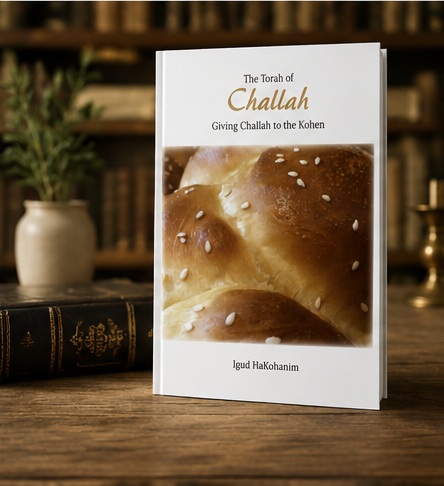
The Torah of Challah
A detailed study of giving challah to the Kohen in Israel and throughout the Diaspora.
View the Book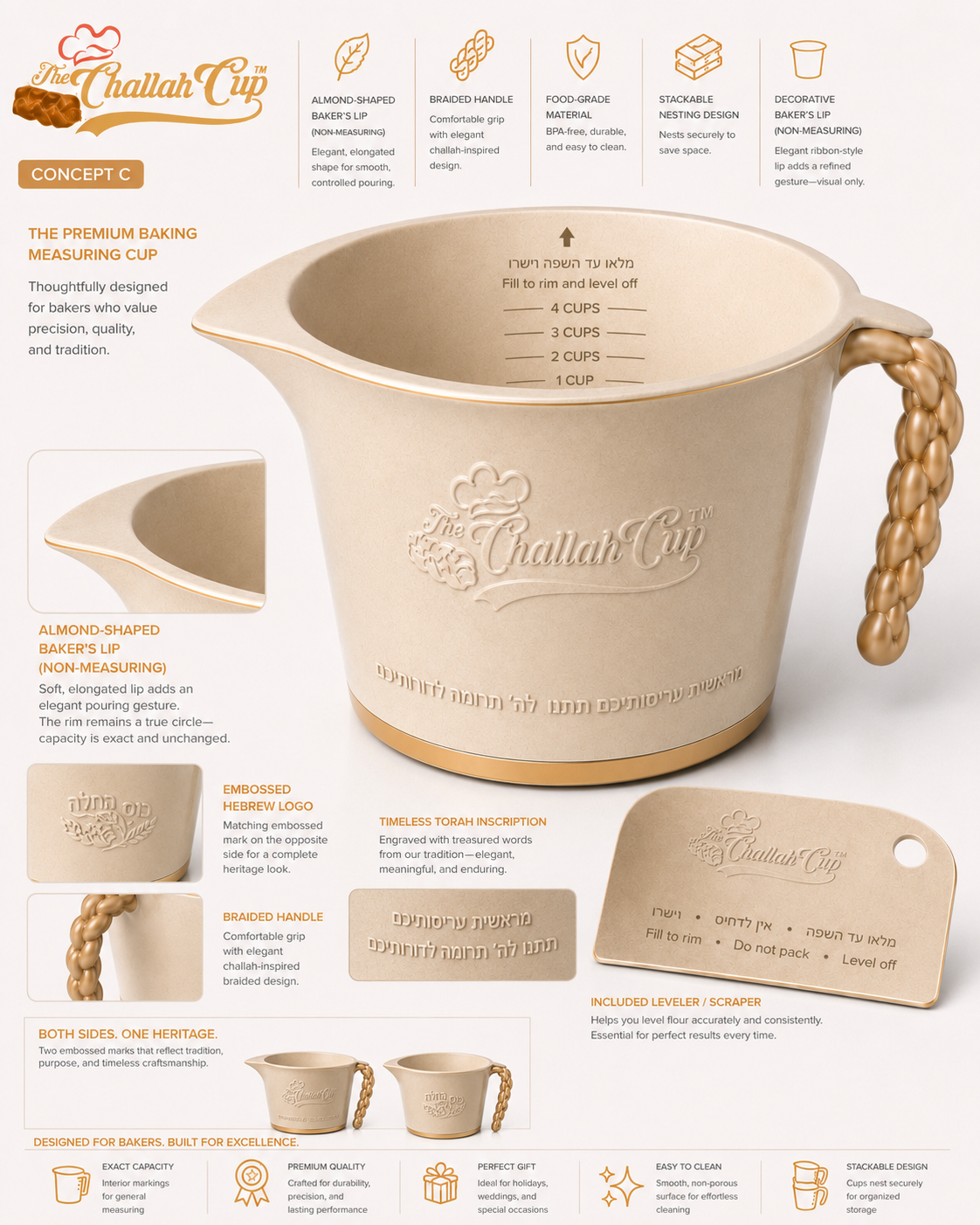
The Challah Cup®
A practical measuring tool developed by Igud HaKohanim for determining when a dough reaches the challah threshold.
Support the work of Igud HaKohanim
Help preserve the giving of Challah and strengthen the living framework of Matanot Kehuna.
Support the Mission