
Help a Torah gift complete its journey
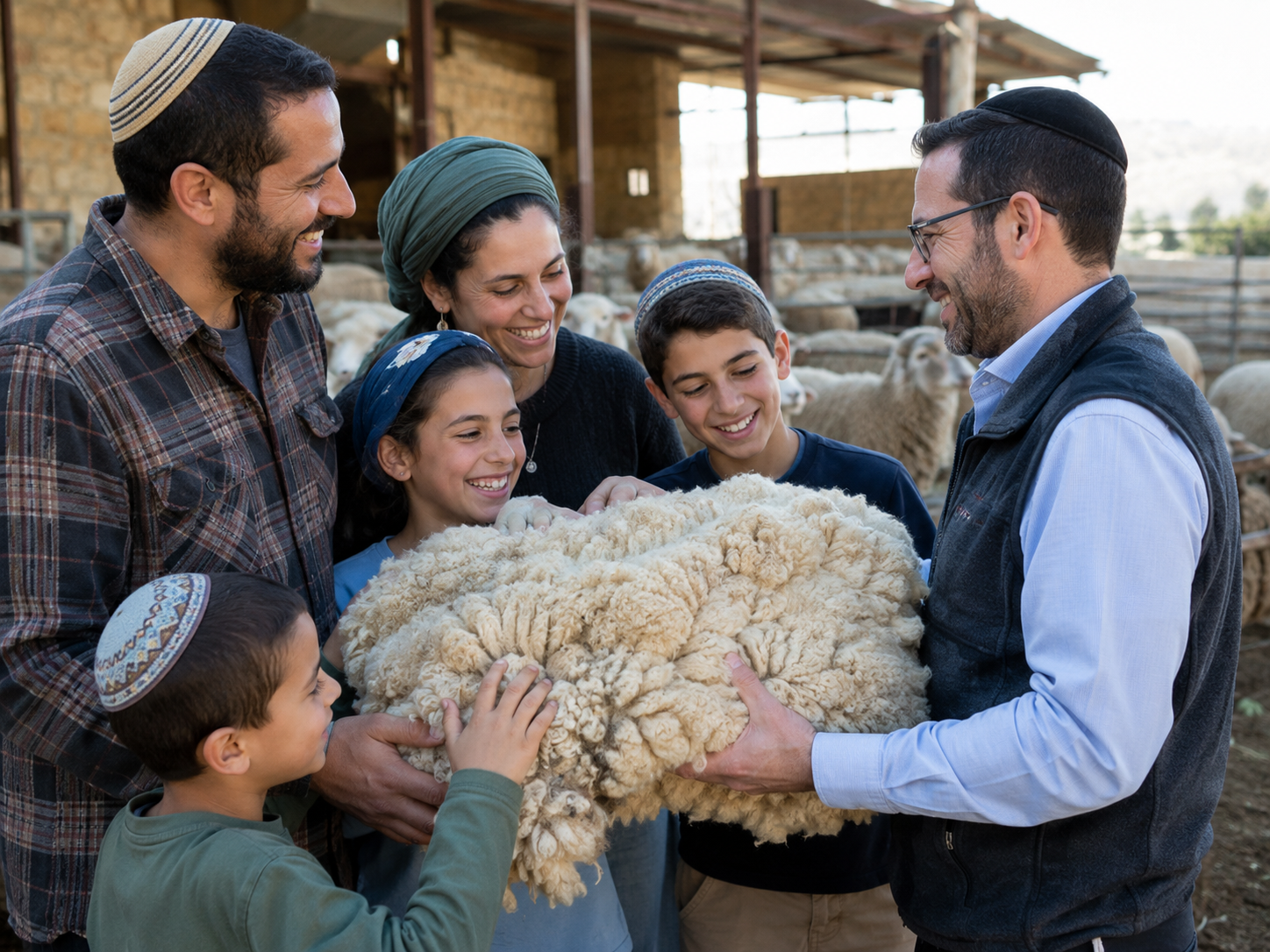
Reshit HaGez begins with something very concrete: a Jewish shepherd or flock owner separates the first shearing and gives the wool to a Kohen.
But raw wool is only the beginning. In modern life, a relatively small quantity of fleece is rarely useful to a Kohen by itself. Turning that wool into something he can actually wear requires cleaning, sorting, fiber preparation, spinning, weaving or knitting, sewing, finishing, transportation, packaging and delivery.
The Reshit HaGez Fund exists for that purpose. It allows others to participate in advancing the mitzvah by supporting the ancillary work that takes the wool from the farm to a completed garment or wearable item placed into the hands of a registered Kohen.
The wool is the gift. The fund helps deliver its purpose.
Fund participation supports the practical costs surrounding the gift: wool preparation, spinning, weaving or knitting, sewing, finishing materials, local transportation, logistics, packaging and delivery of the finished product to registered Kohanim.
Take Part in Reshit HaGezWhat does your participation support?
The gift of wool is not purchased with the fund. It comes from the mitzvah itself. The fund supports the additional work needed to preserve, process and deliver that gift in a useful form.
זִכָּה לוֹ בְּרֵאשִׁית הַגֵּז — לִלְבּוּשׁוֹ
“He granted him the first shearing — for his clothing.”
Mishneh Torah, Hilchot Bikkurim, Chapter 10
Completing the circle of Reshit HaGez
The goal is not to collect wool simply for the sake of collecting wool. The goal is for the Torah-designated gift to reach Kehuna and, wherever practical, become something the Kohen can actually wear.
Jewish flock in Eretz Yisrael → Reshit HaGez → registered Kohen → local processing → finished wool item → Kohen
How the first production route works
The first route centers on one flock in Eretz Yisrael and creates a clear, documented chain from the shearing to the delivery of a finished wool gift.
The Flock
The grower separates Reshit HaGez during the shearing and places the actual gift of wool into the mitzvah process.
The Kohen
A registered Kohen who has gone through Igud HaKohanim’s lineage-review process is associated with the gift.
The Wool
The fleece is sorted, cleaned and prepared for textile work while its connection to the original gift is preserved.
The Craft
Local artisans spin, weave, knit or sew the wool according to its quality and the item being produced.
The Finished Gift
The completed tallit, kippah or other suitable wool item is prepared for delivery to a registered Kohen.
Delivery to the Kohen
The finished item completes its journey by reaching the Kohen for whose benefit the gift was designated.
From the Land, within the Land
Where practical, we seek to keep the production chain connected to the place where the mitzvah begins: sheep raised in Eretz Yisrael, a local grower, local wool work and a Kohen who receives the completed product.
The wool therefore does not disappear into an anonymous textile supply chain. Its identity and story remain connected from the flock through the finished gift.
Let the wool determine what we make
Not every fleece is suited to the same type of garment. Each batch is evaluated according to fiber quality, length, texture and suitability for hand processing.
Rather than forcing every batch into one predetermined product, the finished item can be selected according to what can be made from that wool in a useful, dignified and practical way.
What can the wool become?
The preferred result is something the Kohen can actually use. The particular item depends on the wool, the quantity available and the production method suitable for each batch.
Tallit Gadol
A principal option when the wool can be spun and woven into an appropriate fabric, joining the priestly gift with another actively worn mitzvah item.
Tallit Katan
An option when the quality and processing of the wool allow production of a fabric suitable for comfortable regular wear.
Wool Kippah
For suitable batches, the wool may be spun, knitted or felted into a kippah — a practical item that can remain in regular use by the Kohen.
Another Wool Garment
When the nature of the fiber is better suited to another garment or wearable wool item, the product can be adapted to the material rather than the material being forced into the product.

Finished gifts are directed to registered Kohanim
Igud HaKohanim maintains a Kohen registry supported by paternal-lineage review, relevant documentation and family and community information. The registry allows the Reshit HaGez initiative to connect finished gifts with identified Kohanim.
Each participant carries one part of the journey
The Grower
Separates the first shearing and gives the actual Reshit HaGez gift to the Kohen.
The Artisan
Uses skilled textile work to clean, spin, weave, knit, sew and finish the wool.
Fund Participants
Help finance the ancillary work and logistics that allow raw wool to become a useful gift and reach the Kohen.
The Kohen
Receives the Torah-designated gift in a form that can remain connected to his daily life and identity as a Kohen.
Help carry Reshit HaGez from the fleece to the Kohen
The fleece is already a gift. Your participation helps provide what comes next: cleaning, spinning, weaving, knitting, sewing, finishing, logistics and delivery.
Together, those supporting steps allow a small quantity of raw wool to complete its journey as a real and usable gift placed into the hands of a registered Kohen.
Participate in the Reshit HaGez FundBegin with one flock. Build a working network.
The first route gives us a repeatable model: relationship with the grower, designation of the gift, connection to a Kohen, local processing, documentation, production and final delivery.
As additional farms, artisans, supporters and Kohanim join, the same framework can grow into a broader network in which Reshit HaGez is not left as unused raw fleece, but is carried systematically from the flock to Kehuna.
Are you a Kohen?
Kohanim interested in participating in Igud HaKohanim’s priestly-gifts initiatives and being considered to receive a finished Reshit HaGez item are invited to contact us regarding the registry and lineage-review process.
Contact the Kohen RegistrySheep Growers & Wool Artisans
Igud HaKohanim welcomes contact from sheep farms, spinners, weavers, knitters, textile workers and other artisans interested in participating in the Reshit HaGez chain from fleece to finished gift.
Contact Igud HaKohanimParticipate in bringing the gift all the way to the Kohen
Your participation supports the ancillary work required to take Reshit HaGez from raw fleece through spinning, weaving, knitting or sewing, and ultimately through the logistics and delivery of a finished wool gift to a registered Kohen.
Participate in the Reshit HaGez Fund