Sedeh Achuzah
A person’s land may sustain his family for generations. Yet the Torah reminds us that every owner is entrusted with that land for only a chapter of its existence.
The deed may bear our name. The land belongs to God.
When Land Is Dedicated to God
Leviticus describes an extraordinary institution: an owner consecrates ancestral land to God, and under the Torah’s prescribed Jubilee conditions, the land becomes an inheritance of the Kohanim.
וְאִם מִשְּׂדֵה אֲחֻזָּתוֹ יַקְדִּישׁ אִישׁ לַה׳“If a man consecrates to the LORD part of the field of his possession…”Leviticus 27:16
וְהָיָה הַשָּׂדֶה בְּצֵאתוֹ בַיֹּבֵל קֹדֶשׁ לַה׳ כִּשְׂדֵה הַחֵרֶם לַכֹּהֵן תִּהְיֶה אֲחֻזָּתוֹ“When the field goes out in the Jubilee, it shall be holy to the LORD… its possession shall belong to the priest.”Leviticus 27:21
We Hold the Land for a Time
A person may spend decades acquiring, cultivating, and improving an estate. He raises a family, enjoys its produce, and sees his life’s work flourish.
With maturity comes another understanding: the land existed before him and will remain after him. His ownership was real, but his stewardship was temporary.
From the beginning, Adam was entrusted with the earth לְעָבְדָהּ וּלְשָׁמְרָהּ — to work it and to guard it (Genesis 2:15).
Sedeh Achuzah offers a profound expression of that responsibility: a person can direct what was entrusted to him toward the service of its ultimate Owner.
A Message That Outlives the Estate
A successful landowner may reach a point when he has seen the rewards of his work: children, grandchildren, a flourishing estate, and the security he has provided.
He comes to understand that he was never the final destination of the property. He was its custodian for one chapter.
Such a decision can leave descendants more than wealth: a lasting understanding of responsibility, gratitude, and stewardship.
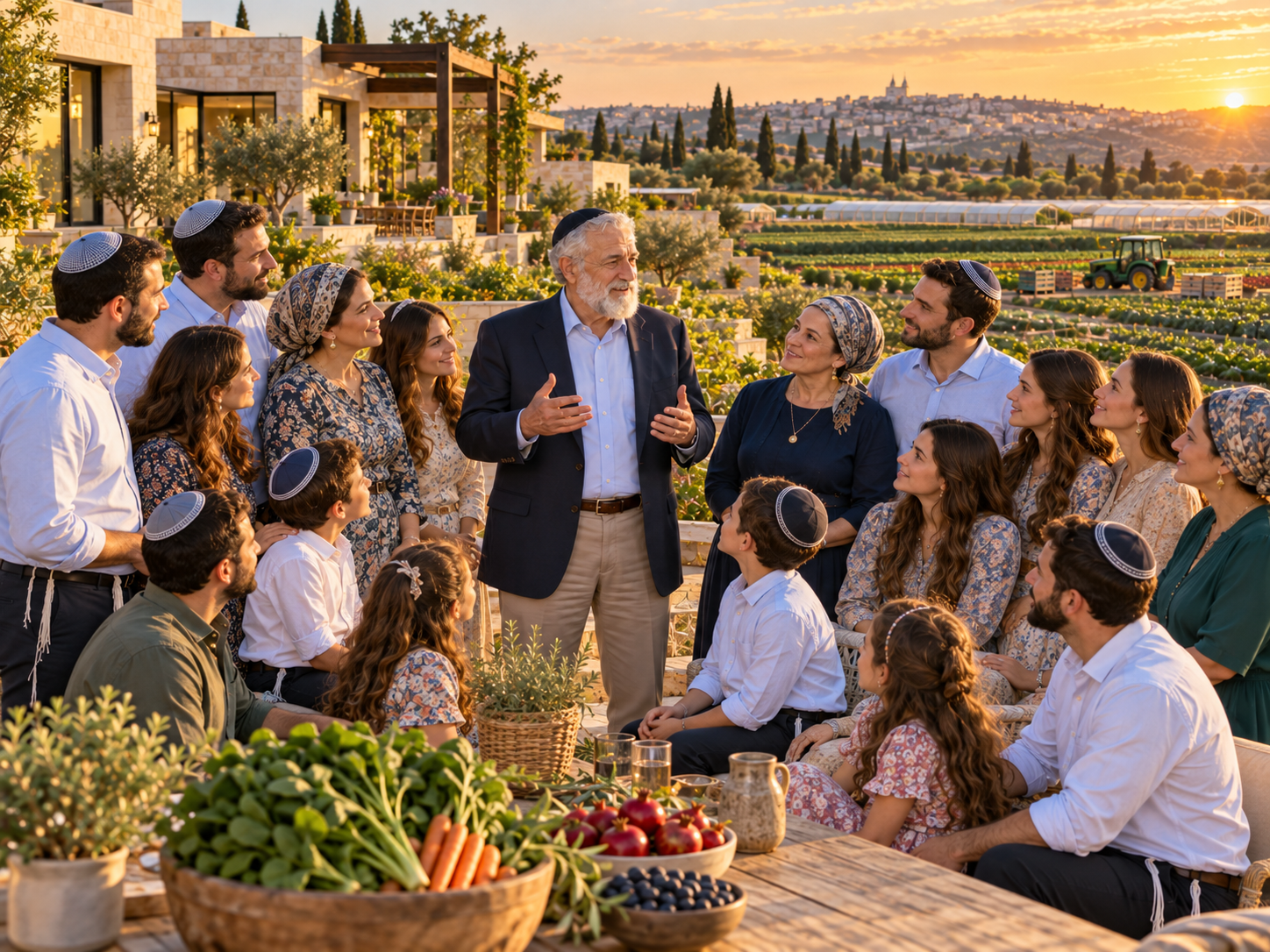
Dedicating Real Property in Our Generation
The original laws of Sedeh Achuzah operate within the Jubilee system. Yet the Torah’s teaching about consecrated land, stewardship, and the priesthood remains meaningful today.
Consecration and Inheritance
Leviticus establishes the original process of consecration, valuation, redemption, and eventual priestly inheritance under the Jubilee laws.
A Lasting Act of Stewardship
A property owner may voluntarily contribute land, a home, a building, or an estate interest to support the living institution of the Kohanim.
Igud HaKohanim offers a contemporary institutional avenue for such gifts. Property may support priestly education, preservation, administration, and long-term institutional continuity.
The purpose is greater than the possession: to direct what was entrusted to us toward the service of God.
Questions & Original Sources
How did Sedeh Achuzah originally work?
The Torah distinguishes an inherited field (Sedeh Achuzah) from a purchased field (Sedeh Mikneh).
An owner could consecrate ancestral land. Its value was determined according to the biblical agricultural valuation and Jubilee rules.
The original owner could redeem it. Under the prescribed conditions, a field not recovered by its original owner ultimately became the possession of the Kohanim at Jubilee.
The classical discussions distinguish a field redeemed by another person from one remaining in the sacred treasury, including their different payment requirements.
What changes when Jubilee is not observed?
The Torah’s original automatic transfer of the field to the Kohanim is dependent upon the Jubilee and does not operate in that form when the Jubilee is not observed.
This does not prevent a landowner from voluntarily arranging a present-day property donation inspired by the Torah’s teaching.
Such a gift is completed through the applicable modern legal arrangements. It should not be confused with automatically effecting the original Jubilee transfer or formal Temple consecration.
What kinds of property can be donated?
Igud HaKohanim welcomes inquiries regarding agricultural land, inherited property, homes, apartment buildings, commercial real estate, and estate gifts.
Every proposed gift is subject to review of ownership, title, liabilities, legal restrictions, valuation, and the appropriate charitable receiving arrangement.
Property donations should be carefully planned with independent legal and tax advisers.
To inquire, use our contact page and mention “Sedeh Achuzah — Property Gift.”
Torah and Classical Sources
- Leviticus 27:16–21: Consecration, valuation, redemption, and priestly inheritance.
- Leviticus 25:23: God’s ultimate ownership of the land.
- Genesis 2:15: Humanity’s responsibility to work and safeguard the land.
- Genesis 23:20: Abraham’s established landed possession, described as an achuzah.
- Sifra, Bechukotai: Interpretation of Leviticus 27.
- Tractate Arakhin: The valuation and redemption of consecrated fields.
- Maimonides, Mishneh Torah: Hilkhot Arakhin VaCharamin, chapters 4–5; Hilkhot Shemitah VaYovel.
- Sefer HaChinuch, Mitzvah 355: The valuation of consecrated fields.
- Rabbeinu Bachya, Genesis 23: The meaning of achuzah.
- Tosefta and Jerusalem Talmud: Discussions concerning priestly watches and distribution.
Let the Land’s Next Chapter Honor Its True Owner
The land was entrusted to our care. We may work it, preserve it, and enjoy its blessings for a lifetime. We can also choose to direct its future toward the service of God.
What we choose to do with that trust can become our enduring legacy.
Prefer zero-fee giving? Donate through Zeffy . Igud receives the full donation without platform or processing fees; donors may set the optional Zeffy tip to zero.
Property gifts are subject to review, acceptance, and applicable legal requirements.