
SKIN NEGA’IM · VISUAL STUDY
Vitiligo, Skin Nega’im, and the Kohen’s Role
A focused study of visible skin appearances, the distinctions described by the Torah, and the knowledge required of the Kohen who examines them.
A Focused Study Within the Laws of Nega’im
The Torah’s laws of nega’ei adam require attention to remarkably specific visible features: color, shade, depth of appearance, hair, living flesh, location, spread, and change over time. This page focuses specifically on the study of skin appearances and on modern visual references that can help a Kohen learn to observe those distinctions carefully.
Vitiligo is a medical condition in which areas of skin lose pigment. Because it can produce sharply defined white areas, it provides a useful modern visual reference for studying some of the appearances described by the Torah and its classical interpreters.
The comparison is educational. A medical diagnosis of vitiligo does not by itself establish tzaraat, and visual resemblance alone does not create Torah status. New, changing, or unexplained skin findings should be evaluated by a qualified medical professional.
The Torah Requires More Than Seeing “A White Patch”
Nega’im trains the eye to distinguish. A general impression is not enough.
Named Appearances
The Torah tradition distinguishes among specific appearances rather than treating every pale or white area as one category.
Defined Signs
Hair, living flesh, spread, borders, location, size, and development over time may each affect the Torah analysis.
Direct Examination
Photographs can train the eye, but they do not replace examination of the actual appearance under the required conditions.
The Declaration
Observation leads into a defined Torah process. The operative declaration of tamei or tahor is entrusted to the Kohen.
What the Kohen Must Learn to Recognize
The Kohen is not merely the person who repeats another observer’s conclusion. The Torah tradition expects knowledge of the appearances themselves and of their proper names — בהן ובשמותיהן. Study therefore requires both textual knowledge and disciplined visual observation.
Know the Terminology
Learn the language of Leviticus 13, the Mishnah, the Sifra, and the classical explanations of the appearances and signs.
Train the Eye
Study color, contrast, borders, internal variation, hairs, and the relationship between an appearance and surrounding skin.
Observe Precisely
Determine what is actually visible rather than relying on a broad medical label or immediate visual resemblance.
Proceed with Restraint
A resemblance is not a ruling. Serious Torah responsibility requires caution, patience, proper procedure, and sensitivity.
KNOWLEDGE AND TORAH AUTHORITY
Everyone May Study. The Kohen Is Entrusted to Determine.
This is a designated Torah office, not a claim of natural superiority.
A non-Kohen scholar may understand these laws deeply, and a physician may examine a medical condition with great expertise. Neither fact changes the structure established by the Torah. When an appearance enters the Torah process of nega’im, examination and declaration are assigned to the Kohen.
The ideal is therefore not an uninformed Kohen functioning as a ceremonial voice. He is called to become knowledgeable in the appearances and their names — בהן ובשמותיהן — so that Torah knowledge, trained observation, and the authority entrusted to him operate together.
That authority must be exercised with restraint and dignity. The person before the Kohen may be an elder, a woman, a child, or an infant. Precision in the law and care for the person are not competing responsibilities.

A MODERN VISUAL REFERENCE
Why Vitiligo Is Useful for Study
Vitiligo can create clearly defined areas in which normal skin pigmentation has been lost. It therefore provides a modern example through which students can practice observing whiteness, boundaries, internal pigmentation, contrast, and surrounding skin.
It should not be treated as a one-to-one identification with tzaraat. Torah status requires the signs and process defined by the Torah itself.
Medical Diagnosis and Torah Status Are Different Questions
The physician and the Kohen have distinct responsibilities.
The Medical Question
A qualified medical professional determines whether a person has vitiligo or another skin condition, investigates relevant medical factors, and discusses monitoring or treatment.
The Torah Question
The Torah question asks whether the visible appearance meets the particular criteria of nega’im and what status results through the Torah process. That process culminates in the declaration of the Kohen.
Training the Eye: Visible Features
These photographs are presented as visual study material. They illustrate why color, border, location, variation, and scale must be examined carefully.
Clinical image notice: The photographs below contain close views of skin appearances. They are hidden by default so visitors may choose whether to view them.

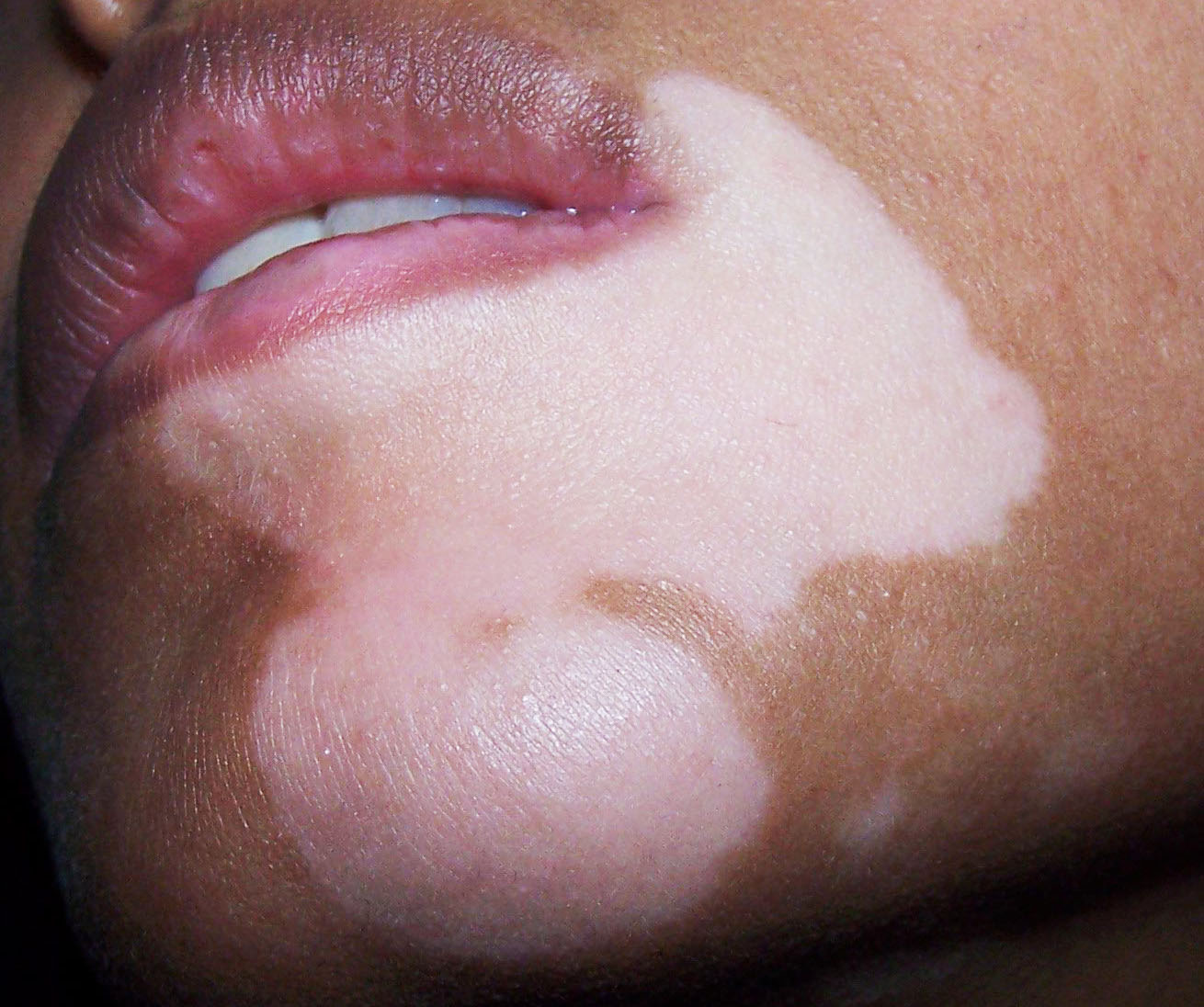
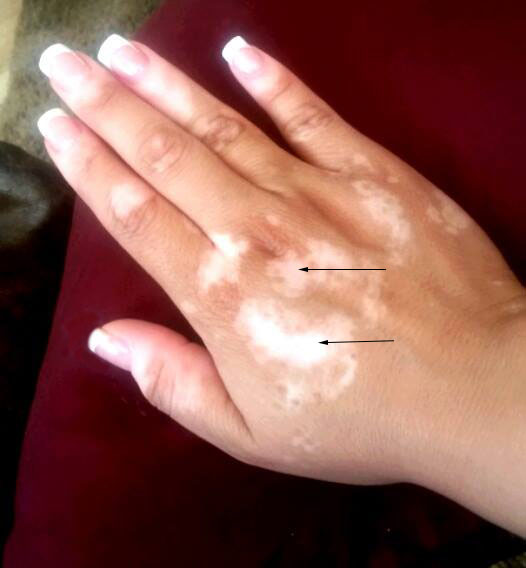
Important: These photographs were selected because particular visible features may assist Torah study. Their inclusion does not identify any individual as tamei, does not establish that a photographed condition is tzaraat, and does not replace either medical care or a properly conducted Torah examination.
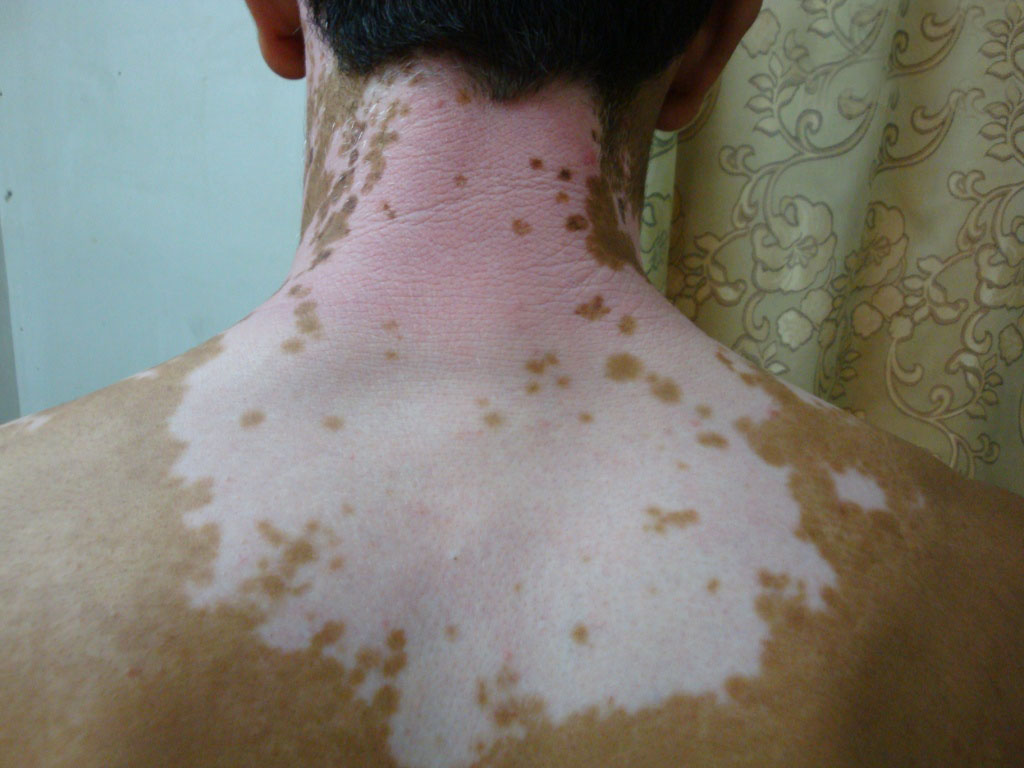
Internal Variation Within a White Area
A white area need not be visually uniform. Darker islands, small points of pigment, changes around hairs, or areas of repigmentation may appear within a larger patch.
These details demonstrate why the Kohen must observe what is actually present rather than begin and end with a broad label for the condition.
RELATED STUDY
Alopecia and the Torah Category of Netek
Leviticus 13 also addresses appearances of the scalp and beard under the category traditionally called netek. That subject has its own terminology, signs, and examination process and should therefore be studied separately from ordinary skin nega’im.
Explore Alopecia and NetekFURTHER RESEARCH
Igud HaKohanim Publications

Parshat Nigei Or Adam — I
Hebrew study of Leviticus 13:1–8 with commentary, tables, photographs, rulings, and Kohanic responsibility.

Parshat Nigei Or Adam — II
Continuation through Leviticus 13:8–23, including spread, inflammation, and the Kohen’s responsibility to teach.


Some external purchase links may be affiliate links. Igud HaKohanim Inc. may receive a commission from qualifying purchases at no additional cost to the purchaser.
Continue the Nega’im Study
This page focuses on visible skin appearances. The main Nega’im & Tzaraat section places these details within the broader Torah framework.
Nega’im & Tzaraat
Return to the parent section for the broader Torah framework, categories of nega’im, and the role of the Kohen.
Main Nega’im Page →Leviticus 13: The Torah Text
Follow the relevant passages and terminology on which the laws of skin nega’im are built.
Read the Text →What the Kohen Must Know
Colors, signs, viewing conditions, timing, terminology, and the discipline required of the Kohen.
Study the Duty →Why Only the Kohen Declares
The Torah structure joining priestly knowledge, responsibility, declaration, and service to Israel.
Explore the Principle →Colors, Shades, and Signs
Continue into technical visual material and the terminology used to distinguish appearances.
View the Study Gallery →Books and Source Library
Explore the complete publication collection, source material, previews, and related research.
View Publications →Study Without Stigma
Visible skin differences can carry significant emotional and social weight. The study of nega’im should never become a license to assign personal guilt, spiritual blame, or moral inferiority to someone living with vitiligo or another skin condition.
Classical sources discussing the spiritual dimensions of tzaraat deserve serious study. They also require humility. Our purpose here is to recover Torah knowledge, prepare Kohanim, and explain the Torah’s structure faithfully — not to diagnose a person’s soul or replace medical care.
Support the Mission of Igud HaKohanim
Help us preserve and teach the Torah responsibilities of Kehuna, publish serious research, develop educational resources, and prepare future generations of Kohanim for the duties entrusted to the descendants of Aharon.
Support Our MissionFor questions concerning this research, published material, source texts, or institutional collaboration, contact Igud HaKohanim.