KOHEN STUDY GALLERY

Tzaraat: Colors, Shades, and Signs

A structured visual introduction to the named appearances of nega’im, the signs that accompany them, and the disciplined observation expected of the Kohen.

OPEN TO ALL, DIRECTED ESPECIALLY TO KOHANIM

Knowledge Belongs with the Office Entrusted to the Kohen

Torah learning is open to every serious student. This gallery, however, is organized primarily as a learning resource for the Kohen. The Kohen is expected to become knowledgeable in the appearances and in their proper names—בהן ובשמותיהן—and not merely to lend his voice to a subject he has never learned.

This does not imply natural superiority in eyesight or intelligence. Everyone has eyes, and Torah scholarship is found throughout Israel. The significance lies in the Torah’s designation: in this sensitive field, the examination and operative declaration are entrusted to the Kohen. Knowledge, observation, authority, and care are therefore meant to be joined in the same Torah office.

Nega’im is thus a particularly clear expression of the Kohen’s wider responsibility to preserve knowledge, distinguish between sacred categories, and instruct Israel in Mishpat Hashem. The person before him may be an elder, a woman, a child, or an infant; exactness must therefore be joined to dignity, patience, and restraint.

Educational Images, Not a Diagnosis or a Torah Ruling

The photographs on this page are visual references for Torah study. They do not identify any person as tamei, do not establish that a medical condition is tzaraat, and do not replace medical evaluation or the direct Torah examination required for a determination. Lighting, skin tone, camera exposure, scale, image compression, and display settings can materially alter what the eye perceives.

Two Primary Appearances That Form Four

Mishnah Nega’im opens by organizing the white appearances into two primary names and two related shades. The comparisons below are conceptual reference points from the Mishnah, not screen-calibrated color samples.

מַרְאוֹת נְגָעִים שְׁנַיִם שֶׁהֵן אַרְבָּעָה… בַּהֶרֶת עַזָּה כַשֶּׁלֶג… וְהַשְּׂאֵת כְּצֶמֶר לָבָן… שְׁנִיָּה לָהּ כִּקְרוּם בֵּיצָה.

PRIMARY APPEARANCE

Baheret — בהרת

The brightest named white, compared by the Mishnah to snow.

Open Kohen study note

Baheret is the primary reference for the most intense white appearance. Its comparison to snow describes relative visual intensity, not a digital color value that can be reproduced reliably on a screen.

A learner should examine the entire appearance: intensity, border, internal variation, qualifying size, and any additional sign. Brightness by itself does not establish a ruling.

RELATED SHADE

Sapachat of Baheret

A secondary white associated with baheret, compared to the lime of the Sanctuary.

Open distilled Sapachat note

The older Sapachat study explains the term as a secondary or attached appearance: less intense than its primary white, yet still capable of joining the primary appearance within the Torah framework.

It may also describe what remains when a stronger appearance loses some of its whiteness. The central lesson is that “secondary” does not mean irrelevant; the Kohen must learn how each related shade belongs to its primary category.

Read the full Sapachat source note

PRIMARY APPEARANCE

Se’et — שאת

Compared by the Sages to clean white wool; the precise ordering is discussed in the Mishnah.

Open Kohen study note

Se’et is a primary named appearance, traditionally compared to white wool. It must be learned as its own category and together with its related sapachat.

The word “raised” does not require an actual raised surface. As throughout skin nega’im, the Torah directs the Kohen to the visual appearance presented to his trained eye.

RELATED SHADE

Sapachat of Se’et

Compared to the thin membrane of an egg and treated as the lower boundary of the four white appearances.

Open threshold study note

This related shade is the practical lower boundary of the four qualifying white appearances. A weaker white falls into the discussion of bohak rather than the ordinary nega’im range.

The learner must therefore study not only the most dramatic white, but also the minimum qualifying intensity and the distinction immediately below it.

What Must Be Observed Before Any Conclusion

A general resemblance is never enough. The Torah process requires attention to a group of interrelated features.

Whiteness and Intensity

Is the appearance within the qualifying range, or is it a weaker white such as bohak?

Borders and Internal Pattern

A border, island of ordinary skin, red admixture, or internal variation can alter the question being studied.

Hair and Living Flesh

White hair, golden hair in a netek, or a qualifying area of healthy flesh are distinct Torah signs with their own rules.

Location and Cause

Ordinary skin, scalp, beard, a healed inflammation, and a burn are governed by different sections of Leviticus 13.

Measurement and Spread

Size, later expansion, and comparison with the appearance previously examined are central to the process.

Time and Viewing Conditions

The timing of examination, natural light, direct viewing, and the required sequence cannot be replaced by a photograph.

Toggleable Visual Study Gallery

Each clinical image is hidden by default. Open only the examples useful to your study, and read the accompanying limitation before drawing any comparison.

Clinical image notice: These photographs show close views of skin or scalp appearances. They are provided to train careful observation, not to encourage self-diagnosis, public identification, or remote Torah rulings.

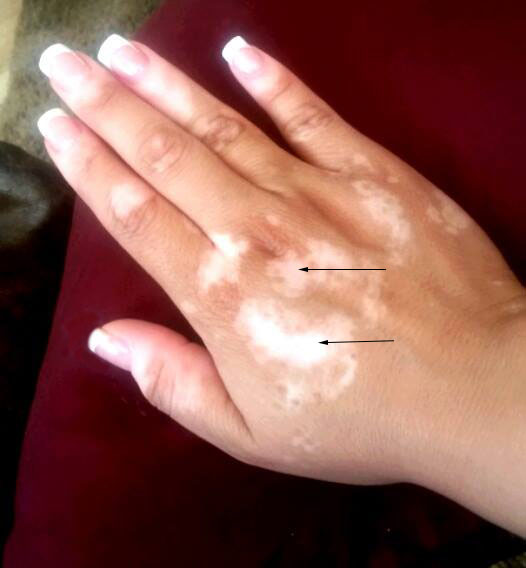
View Image: Broad Areas of Depigmentation
Hands showing clearly defined areas of lost skin pigmentation

Defined White Areas

Useful for observing contrast, boundaries, distribution, and the difference between a medical label and the Torah’s more detailed classification.

View Image: Localized Appearance
Localized skin appearance presented for educational comparison

Scale and Border

A close photograph may exaggerate contrast and conceal scale. The Kohen must know what is present on the actual body, not merely what appears dramatic on a screen.

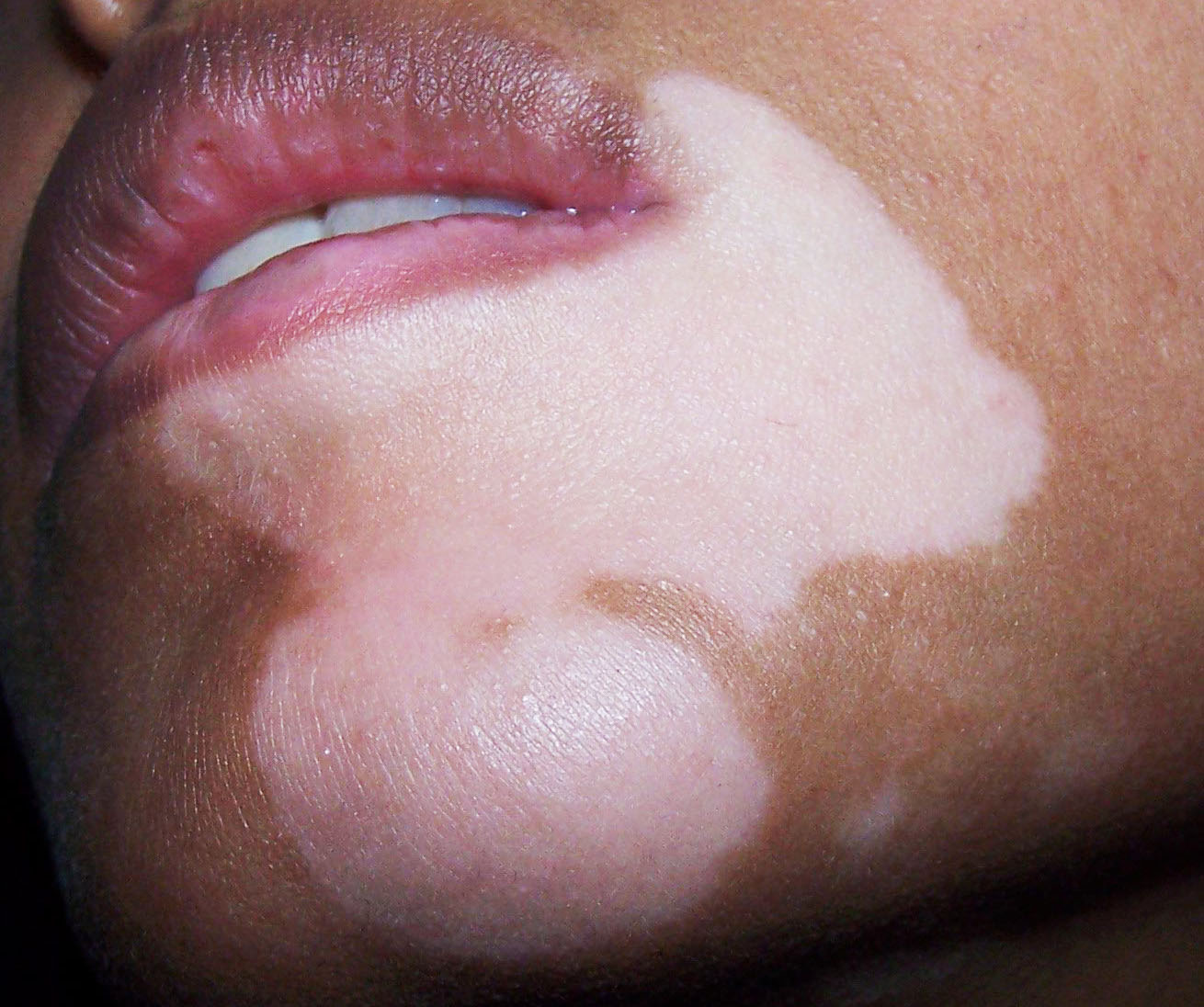
View Image: Appearance Near the Lip
Close clinical photograph of an appearance near the lip

Location Changes the Question

The Torah distinguishes among bodily locations. A useful observation begins by identifying exactly where the appearance is situated.

View Image: Baheret Study Reference
Skin appearance used as an educational reference in the study of baheret

Named Appearance, Not a Photograph-Based Ruling

The whitest shade visible in this study image is presented as a visual reference for baheret—the intense white appearance described as bright as snow. The image can help a learner examine intensity, internal pattern, and border, but it cannot by itself establish that the Torah category is present or produce a ruling.

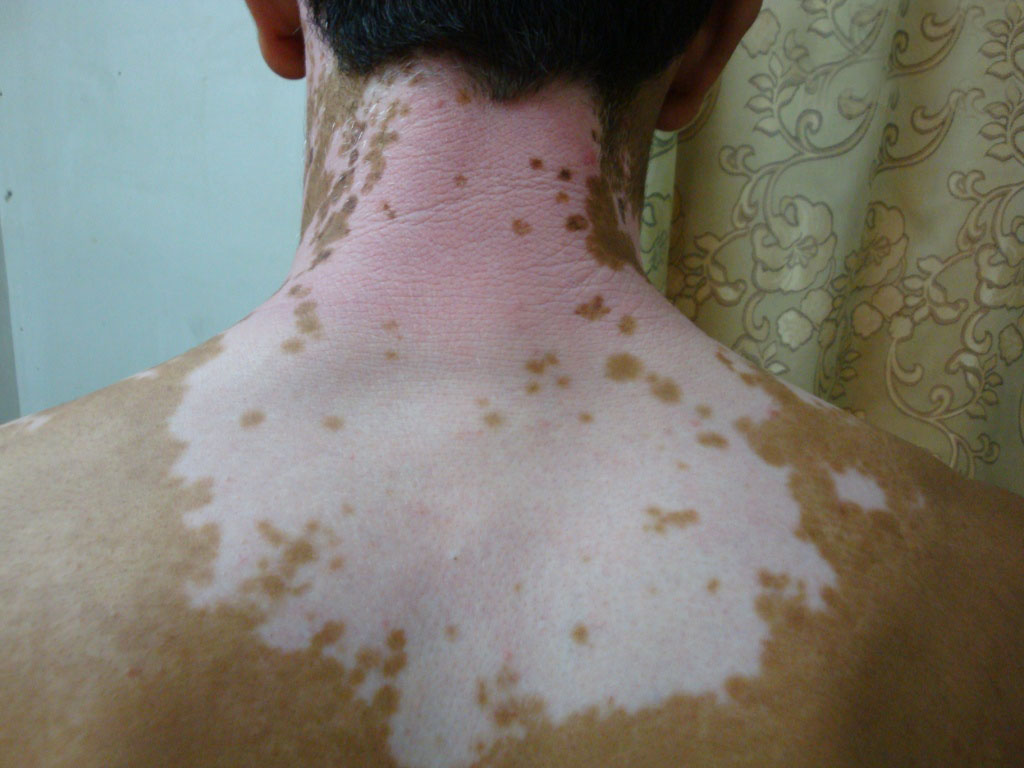
View Image: Internal Variation and Spread
Clinical appearance showing internal variation within a larger affected area

Do Not Reduce a Complex Patch to One Color

The area of healthy-colored skin visible within the broader affected patch is the feature studied here as michyah. The reddish-tinged area toward the back of the neck appears to provide a visual reference for patukh, a white appearance intermingled with red. These internal differences show why the entire patch cannot responsibly be reduced to one general color.

View Study Note: Netek and Alopecia

נתק

The scalp and beard category is not classified through the ordinary four white appearances. Baldness, location, hair type, and later spread have their own rules.

A Related but Separate Visual Discipline

Alopecia can provide a modern visual point of reference, but the Torah category of netek must be studied on its own terms.

Explore Alopecia and Netek

Named Signs and Related Categories

The Kohen must learn not only colors, but the names and rules of the features that change the Torah question.

Open each study note for a condensed presentation of the older Kehuna.org article. The original article remains linked for its full source discussion.

Bohak — בהק

A weak white appearance below the minimum whiteness of the four named nega’im appearances.

Expand the Bohak study note

Bohak is too weak in whiteness to be a skin nega sign of tumah, even when it has a shine. Its importance lies in teaching the Kohen to recognize the boundary below the minimum qualifying white.

The earlier note also distinguishes two stages of hafakh kulo lavan: bohak may interrupt the complete-white condition before a declaration of taharah, while bohak appearing after the Kohen has already declared tahor does not by itself reverse that status.

If the appearance strengthens until it reaches the whiteness compared to an egg membrane, it enters the range that must be assessed as a possible nega.

Read the full Bohak source note

Patukh and Adamdam — פתוך / אדמדם

A reddish admixture within a qualifying white appearance must be assessed as an integrated visual category.

Expand the Adamdam study note

The older study describes adamdam as a qualifying white appearance carrying a reddish tone. The entire patch may appear uniformly reddish-white, or the white may contain red blotches or streaks.

Chazal compare the integrated tone to wine diluted with water or small drops of blood diluted in milk. The Kohen therefore does not isolate “red” from “white”; he studies the combined appearance and the underlying white category.

A photograph can demonstrate the idea of admixture, but lighting and camera processing can shift both red and white. Direct examination remains essential.

Read the full Adamdam source note

Michyah — מחיה

A qualifying area of ordinary living flesh within a nega is a distinct Torah sign.

Expand the Michyah study note

Michyah means an area of healthy, living-looking flesh situated within the broader nega. It is not simply any darker point or any apparent repigmentation.

The Kohen must determine whether the healthy area has the required size and placement and whether it is properly surrounded by the qualifying appearance. Scattered pigment, a broken border, and a defined central island are not automatically interchangeable.

The clinical image above is useful because it trains the learner to separate the healthy-colored interior area from the broader white and reddish-white regions.

White Hair — שער לבן

Two qualifying white hairs rooted within an ordinary skin nega can form a decisive sign.

Expand the White Hair study note

The older note emphasizes two hairs rooted within the nega. In a younger person whose hair in that area is ordinarily dark, their transformation to white may be an immediate sign.

Age and the normal color of hair at that location matter. In an older person with widespread preexisting white hair, the Kohen must determine whether the hairs preceded the nega; areas that ordinarily remain dark require separate attention.

The note excludes other colors from the ordinary white-hair sign and distinguishes the scalp and beard categories, where netek follows different rules.

The sign may appear in any of the four qualifying white appearances and can become relevant even after an earlier declaration of taharah.

Read the full White Hair source note

Pisyon — פסיון

Spread is established through a controlled comparison over time, not from a single image.

Expand the Pisyon study note

Pisyon is expansion of the nega after the Kohen has established a baseline and placed the person into the required period of hesger. The later viewing asks whether the original appearance has extended beyond its earlier boundary.

The older note stresses continuity of observation: the seventh-day comparison is made against the appearance previously examined, traditionally by the Kohen who initiated the quarantine.

Spread can remain legally significant even after an earlier declaration of taharah. A later photograph, however, cannot prove pisyon unless the original dimensions, angle, scale, lighting, and Torah process were properly established.

Read the full Pisyon source note

Shchin and Michvah — שחין / מכוה

A healed inflammation and a burn can host appearances, but each belongs to its own Torah framework.

Expand the Shchin and Michvah notes

Shchin: The older page treats shchin as a broad heat- or inflammation-related injury rather than one modern diagnosis. Once the active wound has healed sufficiently, a qualifying white or reddish-white appearance within it enters the Torah process described for shchin.

Michvah: A burn or scald caused by fire, boiling liquid, heated metal, or another burning source has its own adjacent section. The burn itself does not create tumah; it can become the location of a qualifying appearance and related signs.

The Kohen must identify the cause and stage of the underlying lesion before applying the correct rules. Ordinary skin, shchin, and michvah cannot be merged into one visual category.

Netek — נתק

A bald patch of the scalp or beard has distinct signs and is not classified through the ordinary four white appearances.

Expand the Netek study note

The older research note presents netek as a bald patch of the scalp or beard not created by shaving or hair-pulling. A minimum size and the presence of qualifying fine golden hair may create an immediate sign.

According to the interpretation cited there, the bald area need not display one of the four ordinary white skin appearances. Hair color is assessed by netek’s own rules: white or red hair is not the same sign as fine golden hair, while qualifying dark hair can alter the determination.

Spread after quarantine is independently significant, and the Torah prohibits removing the qualifying golden hairs. The entire scalp or beard location must be understood before comparison to modern alopecia.

Alopecia areata may provide a modern visual reference, especially where finer and lighter hairs remain, but a medical diagnosis and a Torah category are not interchangeable.

Read the full Netek source note

Garments and Leather

Wool, linen, and qualifying leather articles form a separate field of nega’im.

Expand the garment nega’im study note

The garment laws concern eligible wool, linen, and leather garments or vessels and use the color terms yerakrak and adamdam. These colors, materials, and procedures must not be inferred from the rules of human skin.

The Kohen first orders quarantine rather than issuing an immediate final ruling. On the later viewing, spread, persistence, laundering, removal of the affected portion, return of the appearance, and burning can each become relevant.

The older research also discusses material size, mixed fabrics, natural or dyed leather, and the technical laundering process. This is a separate discipline required of a Kohen who intends to know the broader field of nega’im.

Read the full garment nega’im source note

From Looking to Responsible Examination

The Torah’s language—לכל מראה עיני הכהן—directs attention to what appears to the Kohen’s trained eye. The description of an appearance as deeper than the surrounding skin concerns visual appearance; an actual physical depression is not required and is not the determining factor. The Kohen is instructed to judge what his eyes see, without a need to establish the sign by touching or palpating the skin. The task is therefore visual and legal, but never casual.

A photograph can preserve a question, demonstrate a pattern, or assist comparative learning. It cannot reproduce all the conditions of a direct examination. The Kohen must resist both extremes: dismissing the field as unknowable and becoming overconfident from visual resemblance alone.

The proper discipline is study before authority, restraint before declaration, and sensitivity throughout the encounter. This is the same union of knowledge and service that characterizes the Kohen’s broader office in teaching Mishpat Hashem.

Original Research Sources and Further Study

The expandable notes above contain the main teaching points. These links preserve the fuller legacy discussions, their source references, and related material.

Place This Gallery Within the Larger Study

Colors and signs are only one part of the Torah process. The broader study includes the Kohen’s authority, viewing conditions, timing, quarantine, declaration, the distinction between medicine and Torah status, and the sensitive treatment of every person brought for examination.

Support Kohen Learning and Torah Research

Help Igud HaKohanim preserve source-based research, develop responsible visual learning materials, and prepare Kohanim to understand the duties entrusted to the descendants of Aharon.


Support Our Mission